WRITTEN BY Makena Dietschy
GRAPHICS BY Sarah Byrne Bautista
// Native Americans have had a profound impact on the community, and to say otherwise is an understatement. Understanding their importance means acknowledging their significant presence and influence, not only in Walnut Creek, but in the United States, a country many call home.
FEDERAL RECOGNITION ACROSS THE BAY
In the Bay Area, the Native American population is estimated to be around 18,500 people. These nearly 20,000 individuals have shaped and continue to influence many aspects of the Bay Area. The predominant Indigenous group in the Bay Area region is the Muwekma, also known as the Ohlone Tribe. That umbrella name includes several tribes: the Chochenyo and Karkin in the East Bay, the Ramaytush in San Francisco and the Yokuts in the South Bay and Central Valley. The Muwekma is currently fighting for restoration. Throughout the Bay Area, members of the tribe and supporters are actively advocating for Federal recognition of their tribe once again. Even after obtaining their positive determination of “previous unambiguous Federal Recognition,” the Muwekma Tribe still had to submit additional documentation to satisfy the Branch of Acknowledgment and Research’s mandatory criteria. After continuous review and referral periods, 24 years later, they still lack federal recognition. This is the same situation that many tribes across the country are being challenged with.
Federal recognition does not create tribes, but in turn, it cements their right to self-determination. It creates an element of trust between the tribe and the US government, resulting in faith that they and their land are protected under the law. Muwekma Chairwoman Charlene Nijmeh stated on their public website, Muwekma Ohlone Tribe, advocating for their federal recognition, “We must restore our sovereignty in order to ensure our traditions, culture, and language survive and do not come under attack once again.”
LAND ACKNOWLEDGMENTS
The very land beneath students’ and faculty’s feet today, the grounds of Las Lomas High School, once belonged to the Bay Miwok people. In May of 2024, The Acalanes Union High School district presented a land acknowledgment to the school recognizing that its sites, including Las Lomas High School, are on the unceded ancestral lands of the Bay Miwok, interconnected with and neighboring East Bay Ohlone nations. A land acknowledgment is a formal statement that recognizes Indigenous people as the original inhabitants of the land. By introducing this land acknowledgment, Las Lomas stands with Indigenous communities in recognizing the archetypal role they play in communities everywhere, but more specifically on Las Lomas’s campus. An excerpt from Las Lomas’s land acknowledgment reads, “We recognize them as the original caretakers of this land. For thousands of years, the Bay Miwok and East Bay Ohlone nations thrived in this area, and we honor their living cultures, traditions, and connections to this land, which continue to persevere. We recommit ourselves to learning from the Indigenous people of the East Bay to move toward a more equitable and inclusive future. We recognize the historical and ongoing contributions of Bay Miwok and East Bay Ohlone people to our communities; Indigenous people should not be spoken about solely in the past tense.” The importance of these land acknowledgments cannot be adulterated, for they are statements that recognize the history of the land and its original inhabitants, giving a voice to communities that have often not had one. Not because Indigenous communities do not have something to say, but because the world has often not wanted to listen.

NATIONAL NATIVE AMERICAN HERITAGE MONTH
This November, Las Lomas will join all of the country in celebrating National Native American Heritage Month, recognizing the cultural contributions and history of Native Americans. By incorporating land acknowledgments and social media campaigns, Las Lomas’s The Page aims to spread awareness and honor the often-overlooked heritage of Native communities in the region.
Indigenous communities have often been marginalized throughout history. Many suffer from displacement, loss of cultural heritage and systemic discrimination, but without fail, Native American culture has evolved and adapted over time. Native communities actively work to preserve and celebrate their heritage today through cultural events, engaging in traditions predating many generations.
Educating students of all ages about Native American heritage is crucial for fostering a respectful and informed community. Schools should concentrate on collaboration with local Native American tribes to provide accurate information on a culturally sensitive topic. By doing so, they can fabricate a curriculum that highlights the contributions and struggles of Native Americans, making connections to the local area and its history. This approach not only educates students but further empowers a younger generation to become advocates for Indigenous communities. Knowledge is power, so creating an academic environment with the message of inclusion and awareness as the cynosure will no doubt progress to a better future for all.
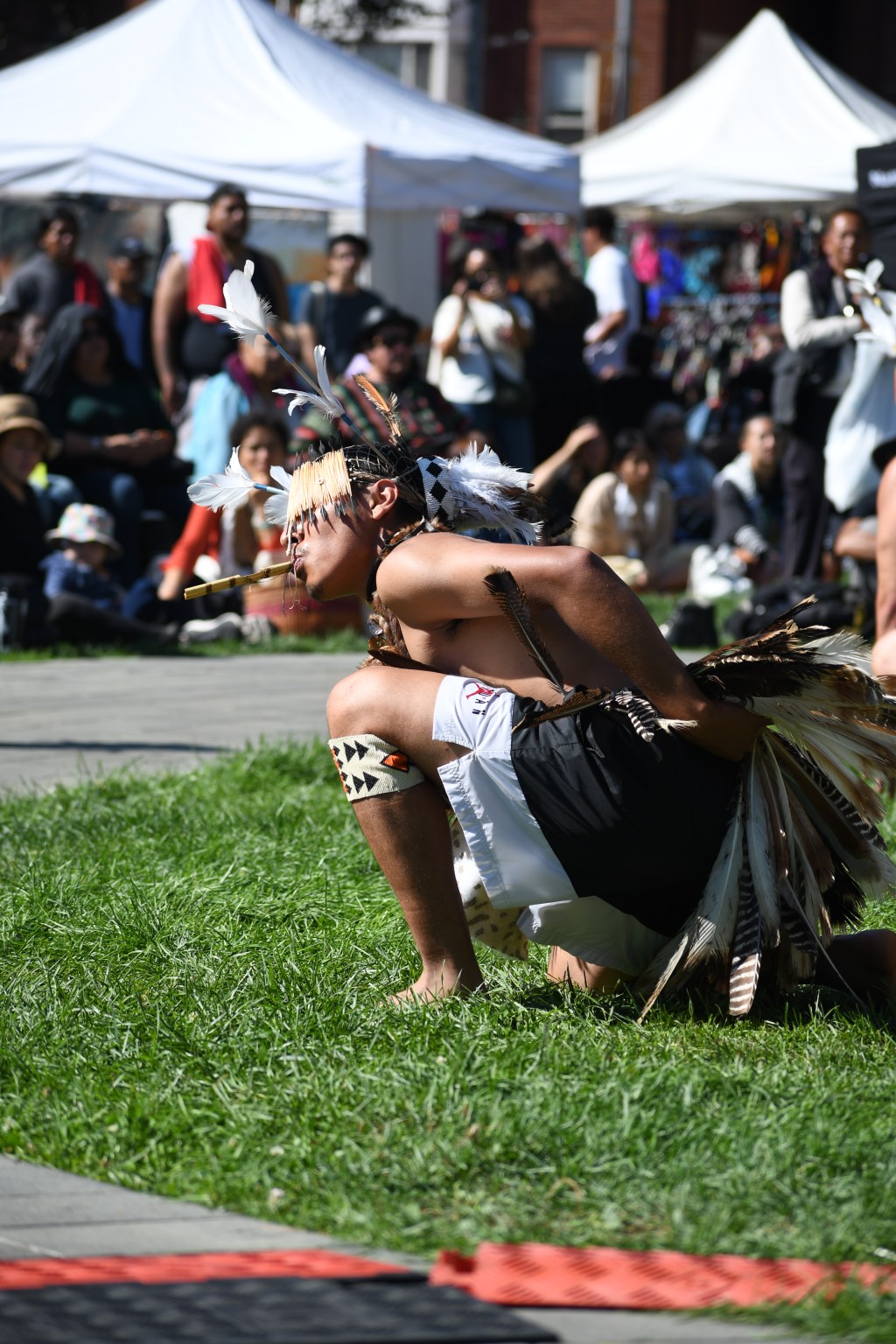
National Native American Heritage Month at Las Lomas is an opportunity to educate, celebrate, and honor the Native communities that have shaped and continue to influence the Bay Area. Las Lomas is continuing a path of awareness through the voice of this very publication. Las Lomas’s The Page recently attended the Yerba Buena Gardens San Francisco Indigenous Peoples Day event, which showcased Indigenous culture. From traditional musical performances to the selling of handmade goods, the showcase no doubt highlighted the diverse and talented community that they are.
 The Las Lomas Page
Leave a comment