The decision puts a close to one of California’s most consequential political careers
Written by WALTER KAWAHARA
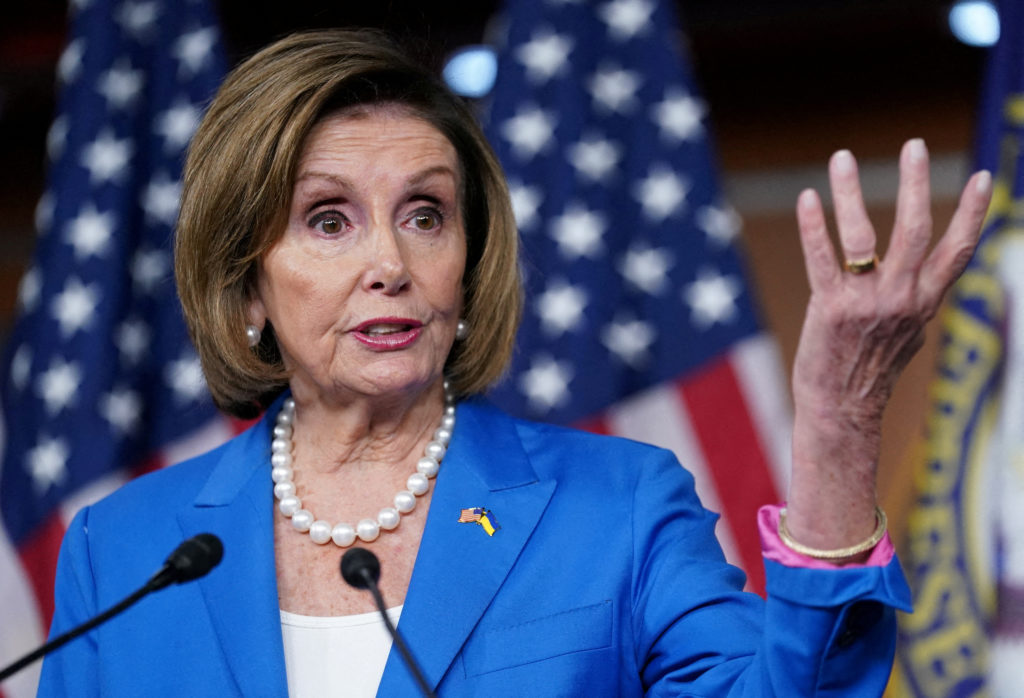
Nancy Pelosi is calling it quits. Pelosi, 85, who currently represents California’s 11th District and has represented San Francisco in Congress for nearly four decades, announced November 6 she will not seek reelection, closing the book on one of the Bay Area’s most consequential political careers and opening the race for her seat in 2026.
The announcement comes off the heels of Governor Gavin Newsom’s Prop 50 initiative passing with nearly 65% of the vote. It was widely expected that Pelosi, a strong supporter of Prop 50, would make the decision whether to seek a 21st term after the election, and the strong showing may have buoyed her confidence about the Democratic Party’s future after a stinging 2024 defeat. “We don’t agonize, we organize, we unionize,” Pelosi told a crowd of supporters in a speech videoed by KTVU Fox 2 San Francisco the night of Prop 50’s passing. Pelosi’s decision did not come in a void, however. Pressure to make a decision has been mounting since February 5, 2025, when fellow Democrat Saikat Chakrabarti announced he would run for Pelosi’s seat, followed by State Senator Scott Wiener on October 22.
In the Bay Area and the D.C. Beltway Pelosi’s retirement is nothing short of a generational political shift. The daughter of Baltimore Mayor Thomas D’Alesandro Jr., Pelosi was first elected to Congress in the 1987 special election. An unabashed liberal who grew up, reports journalist Molly Ball in her 2020 biography of Pelosi, with portraits of FDR and Truman in her home, Pelosi is an adherent to the Kennedy tradition of liberalism: liberal policies, institutionalism and hard-nosed, some critics–of which there are many–have called cynical, party politicking. “She’s a very down-to-earth politician,” Washington Post columnist Eugene Robinson said of Pelosi in a 2022 interview with PBS’ Frontline, “And she’s very tough. She’s very pragmatic in a lot of ways.”
In 2007, this pragmatism paid off when she became the first woman Speaker of the House, a position she would use over the next four years to attack President Bush and advance President Obama’s signature proposals. Washed away by the 2010 red wave, Pelosi would spend the next eight years as minority leader, failing to retake the House until 2018, when Donald Trump’s first presidency delivered Democrats a 36-seat majority and Pelosi a second chance at the Speaker’s gavel. Far more dramatic than her first stint as Speaker, Pelosi was a key figure in both impeachments of Donald Trump, the response to the Covid-19 Pandemic and the passage of Joe Biden’s agenda.
In 2023, Pelosi retired from her position as leader of House Democrats, though she squashed Scott Wiener’s dreams of succeeding her and accompanying shadow campaign in 2024 when she sought and won another term to Congress.
Now Pelosi’s odyssey is finally coming to a close. For conservatives and ultra-leftists alike, her exit is none too soon. Yet for many Democrats on capitol hill, her farewell is a bittersweet one “I wish she would stay for ten more years,” an anonymous House Democrat from California said in an NBC interview.
Meanwhile, in the city she served and shaped for two generations, the race to succeed her is already well under way. Following recent trends, the election may serve as yet another rematch of the progressive-moderate brawl for the Democratic Party that have been playing out over the past decade. Representing the insurgent left is Saikat Charkabarti, the multimillionaire former chief of staff of Congresswoman Alexandria Ocasio-Cortez, and moderates have found their man in the socially liberal (or libertine, according to many conservatives) but fiscally constrained Scott Wiener, while the entry of Supervisor Connie Chan serves as a wildcard in the race.


Leave a Reply