The proposition could decide the outcome of the 2026 midterms
Written by WALTER KAWAHARA // Graphics by SARAH BYRNE BAUTISTA
Californians are known for pride in their state, which boasts a population of nearly 40 million people and has the fourth largest economy in the world. In politics too the Golden State likes to stand out. California is one of the bluest states in the union, and its leaders regularly lock horns with the Trump White House. But to win their latest corrida with Trump, Californians may have sacrificed one of their most prized political possessions.
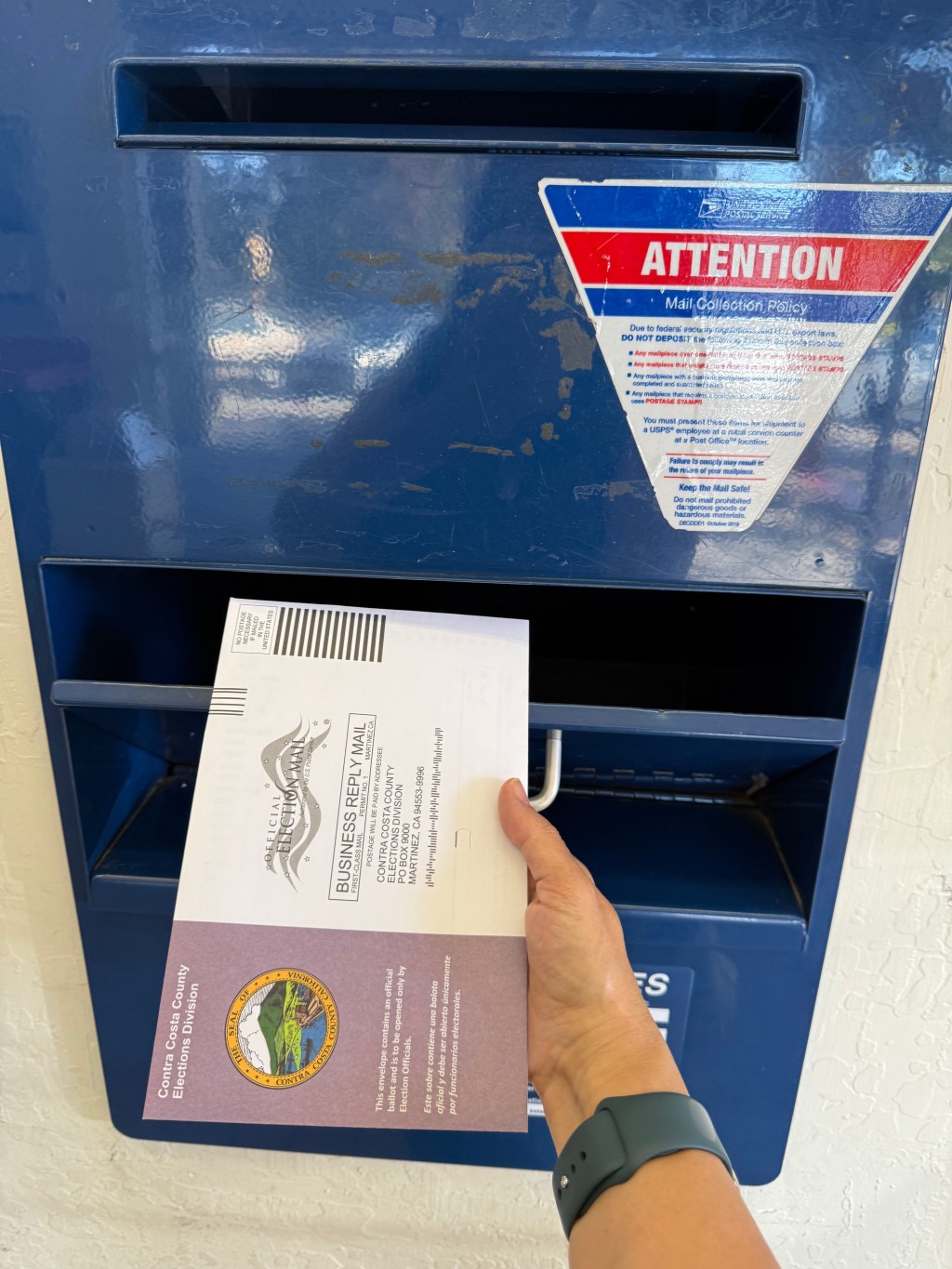
On November 4, 2025, Californians approved Proposition 50, determining whether California will temporarily give the State Legislature the power to redraw congressional maps, by a landslide. Although not all the votes are counted, it will likely pass with at least 60% of the vote.
The proposition comes as Trump is in a tight spot electorally. Democrats would need to pick up only five seats in order to retake the House of Representatives, a majority the party has promised would investigate and stonewall Trump’s Administration. With an average net approval rating of -7.2%, according to RealClearPolling, such gains are not unlikely. In an effort to avoid that possibility, Trump has put pressure on a number of Republican-led state governments to redraw maps and dilute Democratic voting blocs.
Among these, Trump’s biggest prize is Texas, with the new map likely to deliver five seats to the Republican Party. It was this push that has drawn the most ire from Democrats, and prompted Governor Gavin Newsom to say California would undergo retaliatory redistricting.
At the behest of Newsom, widely seen as a presidential hopeful, a new map was drawn and approved by the Democratic supermajorities in the Legislature, to spite the protest of the state’s embattled but still nearly six million strong Republican party, who have argued that Republicans are already underrepresented at the congressional level in California. Republicans represent less than 20% of California’s 52 congressional seats, despite winning 38% of the popular vote in the last presidential election.
The new map would only further exacerbate this issue, netting Democrats five seats currently held by Republicans whilst shoring up majorities where incumbent Democrats would otherwise be vulnerable.
In their campaign, Newsom and California Democrats face a significant snag, however. Though a core part of California’s political identity lies in its liberalism, a reformist streak drawn from the state’s Western heritage is also prominent. Born of the Progressive Era, this reformism rejected machine politics in favor of popular rule, producing, among other things, the state’s proposition system. In 2010, this streak cemented itself when Prop 20, transferring power of congressional redistricting from the legislature to an independent redistricting commission, passed with 61% of the vote. The commission has been a point of pride for Californians, and California is one of only eight states where redistricting is controlled by independent commissions, according to Loyola Law School’s All About Redistricting.
Now, Californians used their proposition system to undo one of its most significant achievements, and by a significant margin. With nearly five million votes in favor and counting, the proposition hovers at nearly 64% ‘yes’ votes, and while some ten percent remain to be counted, projections make clear they will not deliver a victory for the Republicans, allowing Newsom to declare victory the night of, and call for Democratic lawmakers in other blue states to follow his course.
To be sure, he had built a strong campaign, emphasizing that Prop 50 would only temporarily give the Legislature control over the redistricting process, which would then be returned to the commission. Perhaps more potently, he and other Democrats invoked the specter of the Trump administration’s actions both in California in particular and the U.S. generally. From his economic policies, to his handling of immigration, to his deployment of troops to American cities, Trump has given California voters plenty of reasons to believe he is anathema to both their progressive and reformist inclinations. Indeed, Barack Obama, retiring the “when they go low, we go high” mantra of his wife, emerged as an early and prominent supporter of Prop 50, saying it is necessary to protect American democracy.
To be sure, with the possibility of the new map being struck down in court, neither the promise (or threat) of Newsom’s victory nor Trump’s defeat remains clear.
Regardless, California’s oft-heralded but ephemeral values of progressivism, reformism and defiance, were put to the test on November 4, 2025. Voters determined that California will once again go it alone, putting the full force of its population against the politics of the Trump administration by, opponents of Prop 50 say, adopting his tactics.
 The Las Lomas Page
Leave a comment